Portfolio
Task Prioritization at a Learning Center
The following are artifacts designed to facilitate a microlearning experience for administrators and staff at an afterschool learning center. The goal is to help the learning center staff diagnose and prioritize competing tasks and operations while keeping ongoing organizational goals and sudden interruptions in mind. These learning artifacts are featured in a free Canvas Lite course consisting of two modules focusing on using a task prioritization strategy and creating a flexible schedule.
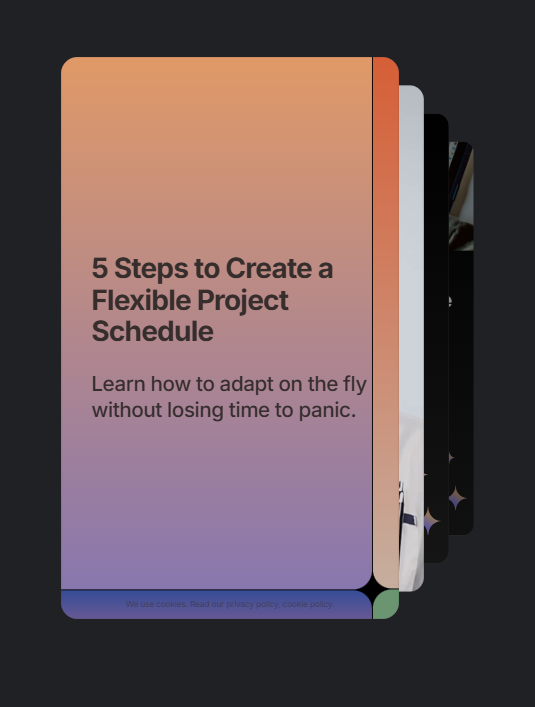
Microlearning: 5 Steps to Create a Flexible Project Schedule
Artifact Details: The microlearning slide deck introduces five simple steps to create a flexible schedule with a list of resources, a quick knowledge check, and a downloadable schedule template. Instead of a typical presentation, a 7taps slide deck mimics popular short-form social media content, accommodating for tight schedules and short attention spans. Each lesson content slide chunks information into a list to avoid cognitive overload, ending with a real-world example that is relatable. A Likert-scale poll helps learners identify their level of confidence towards the lesson content and an editable schedule template is available for learners to immediately apply the content to their workplace environment. This artifact makes learning manageable in a bite-sized module that lasts approximately 10 minutes allowing learners to absorb content without feeling overwhelmed.
Authoring Tool: 7taps
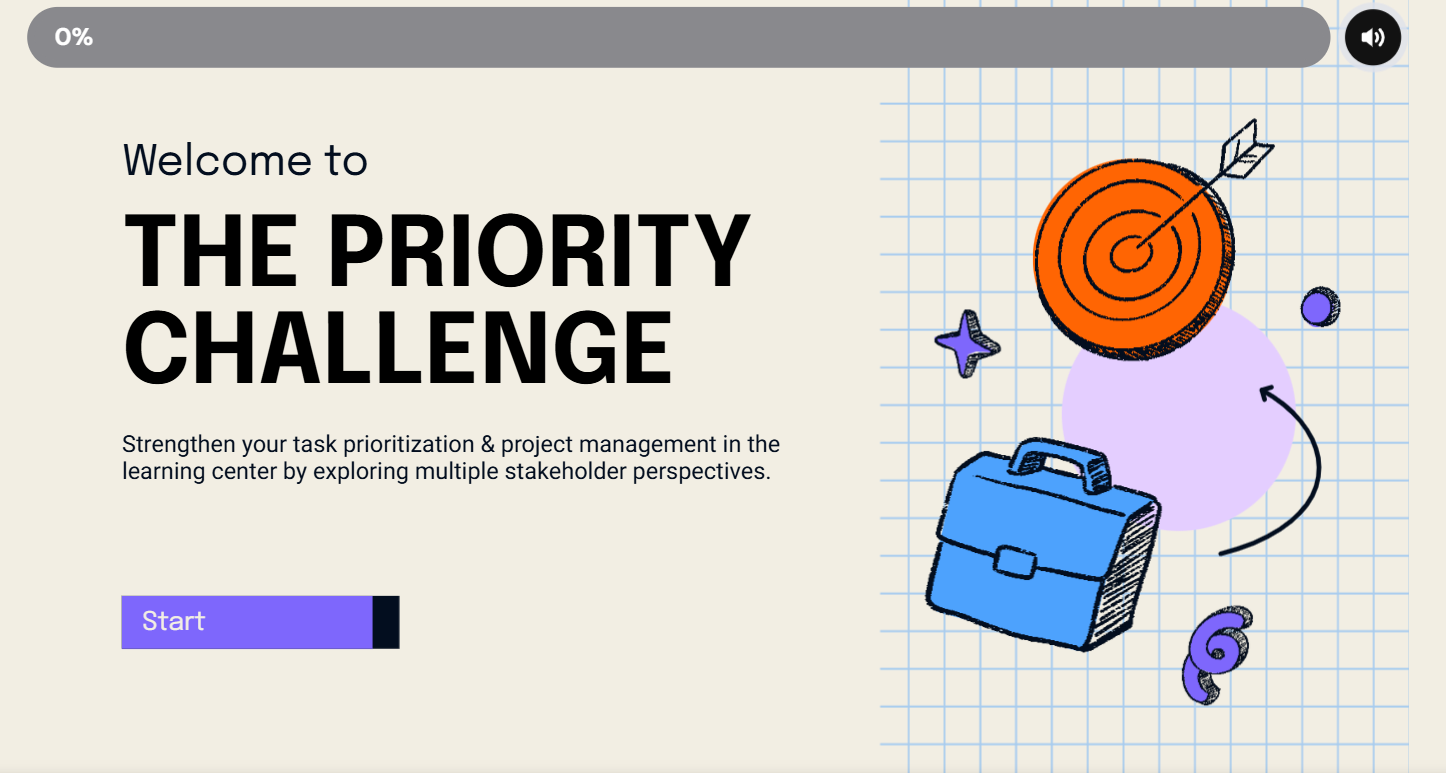
Learning Game: The Priority Challenge
Artifact Details: This learning game reviews each quadrant of the Eisenhower Matrix and provides learners an opportunity to practice important decision-making and prioritization. The mini-game aims to gamify the lesson content to engage learners while simultaneously providing practice opportunities in a different format. Learners take on the role of a learning center manager with the goal of surviving a week of tasks and disruptions. Thus, after reviewing the Eisenhower Matrix quadrants, learners resolve one conflict at the beginning of the week before reviewing the concept of competing stakeholder demands. From there, learners match the stakeholders with the appropriate expectations and demands before moving onwards to the last conflict of the week. Within the overall task prioritization course, this learning game serves as a practical formative assessment and a preview of the next module’s content: designing a flexible schedule.
Authoring Tool: Genially
Microlearning Prototype: Using the Eisenhower Matrix to Prioritize Tasks
Artifact Details: The microlearning prototype introduces the Eisenhower Matrix for prioritization and decision-making with an animated video explaining its applicability for staff at an after-school learning center and a scenario-based knowledge check. Each scenario includes realistic situations that occur at the learning center to enhance the relevancy of the learning experience. The animated video in this prototype includes subtitles and a transcript for accessibility. Each knowledge check also includes immediate feedback, so learners can adjust their understanding in real-time. The player settings for this microlearning prototype are also intentionally designed, so learners can navigate the artifact at their own pace.
Authoring Tool: Storyline 360, Elevenlabs, Adobe Character Animator